Assessing CO2 Capture in Porus Sorbents via Solid-State NMR-Assisted Adsorption Techniques

Solid sorbents that can selectively capture CO2 are a preferable alternative to surpass the limitations of scrubbing liquid amine technology. To understand the CO2 capture mechanisms of solid sorbents, it is crucial to resort to molecular-level insights. In this study, ssNMR spectroscopy was used to assess CO2 adsorption on amine-modified silicas at different pressures and used to quantitatively discriminate between distinct physis- and chemisorbed CO2 species, which is a remarkable advantage over any other conventional adsorption assessment techniques.
IMAGE
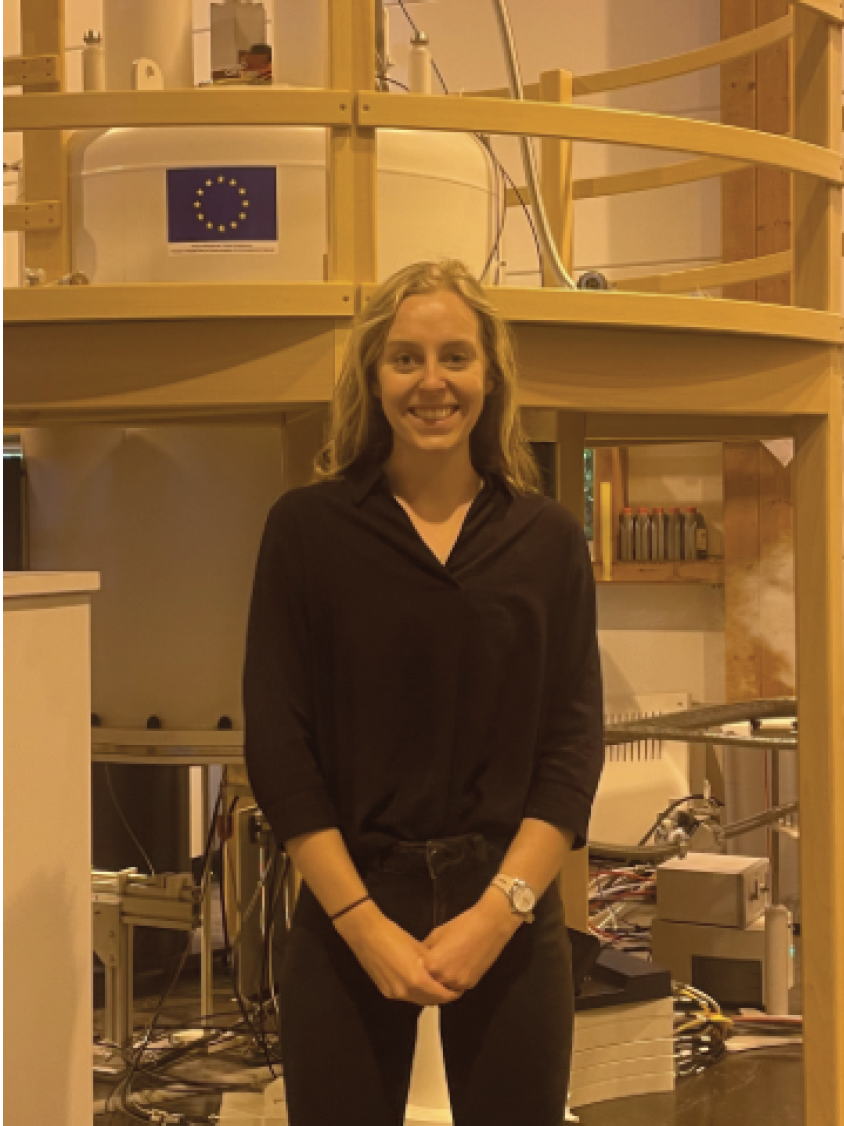
Student profile: Márcio SOARES
Q: Why did you decide to pursue a PhD in Science?
A: From a young age, I always enjoyed learning new things about every topic - I was an extremely curious kid. With this in mind, I never imagined myself working in the industry, in a 9-to-5 job. Instead, I always envisioned a future where I would engage in research, innovation, and problem-solving, ultimately making a positive impact on others. Challenges have always been my driving force, and what better challenge than undertaking a PhD at this moment? My decision has always been clear!
Q: Why did you choose a topic related with NMR?
A: When I studied NMR in the university classes, I always found it immensely interesting. All the complexity, versatility and power of the technique amazed me right away. As someone with a computational background, my excitement peaked when I stumbled upon an opportunity to embark on a PhD thesis that seamlessly integrated computational studies with NMR. Instantly recognizing its alignment with my interests, I knew deep down that this was the path I had to pursue.
Q: Do you have a Science Hero or Mentor?
A: While I wouldn't classify Alan Turing as a Science Hero or Mentor, his life story is undeniably fascinating. As a passionate computer enthusiast, I am awestruck by his involvement in computational science, cryptography, mathematics, and logic, particularly in deciphering the Enigma code. The sheer brilliance and significance of his work are truly remarkable.
Q: What did you want to be when you were a child?
A: During my childhood, one career aspiration that stuck with me for long was to become an airplane pilot. However, my trusty glasses reminded me that it might not be the most suitable path. Fortunately, my enduring passion for science and technology persevered and guided me to the place I find myself today.
IMAGE
Users profile: Marta DUDEK & Piotr PALUCH
XX (PL)
Q: Where are you from and what is your field of research?
A: I'm from a research institute in Poland and my main field of research is chemistry.
Q: Where have you heard of PANACEA?
A: We heard about PANACEA at the conference devoted to solid-state NMR (Alpine NMR Conference).
Q: What was the purpose of your visit?
A: I wanted to use higher field magnet (700 MHz) than the one available in our laboratory to get better resolved MAS NMR correlation spectra under very fast MAS conditions. This was done in order to establish the crystal structure of a salt important in pharmaceutical sciences, folic acid mesylate.
Q: Overall, did you enjoy this access opportunity?
A: Yes, very much. We recommend without hesitation PANACEA.